
Talent is everywhere. Access isn't.
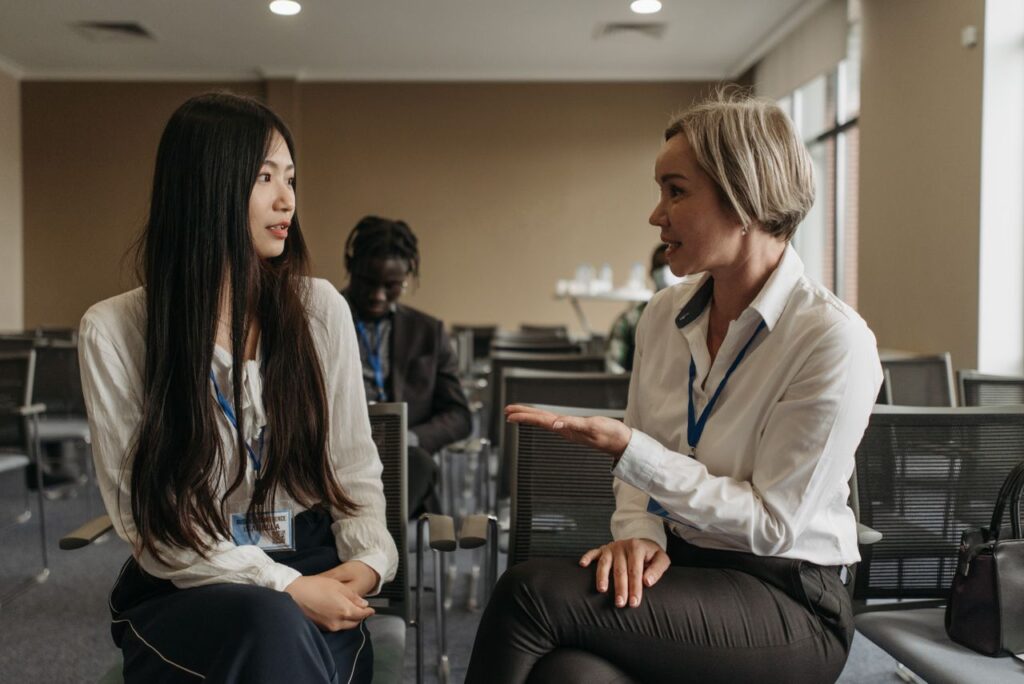
For a lot of capable people, especially those from underserved communities, the hardest part of building a tech career isn’t the work. It’s getting access to the informal systems that quietly decide who moves forward. The quick message about which team is hiring. The honest read on a manager before you take the job. The introduction from someone who knows both you and the opportunity. These systems are rarely written down and are unevenly shared. People without access miss openings they never knew existed.
That’s the gap Wevise works on.
What we do
Wevise goes beyond your typical matching service.
We run structured mentorship cohorts that connect capable professionals from underserved backgrounds with experienced technology mentors. Those mentors bring encouragement, as well as judgment about how careers actually work, timing on when to act and when to wait, and deliberate access: introductions, referrals, and honest context about teams and roles.
We’re specific about what we are and what we aren’t. We don’t place people in jobs, run courses, or operate as a job board. What we deliver is access, offered on purpose, when it’s most likely to matter.
Why we matter
We believe passionately in building community. Our volunteers are part of our community. So are our mentors, our mentees, and our partners. We know that building meaningful community in a disconnected digital age is difficult. Whether someone is exploring their first tech role, making a career transition, or looking to develop leadership skills, Wevise provides a place to learn and grow alongside others.
How it works
Each cohort runs for 6 to 8 weeks of active mentoring as the participant commitment, with follow-up at 3 and 6 months. Participants start by defining a concrete career goal, something specific enough to measure, like moving from IT support into software engineering or stepping into a technical lead role. Mentors work alongside mentees, and our staff keeps close to each pairing so that when momentum stalls, we catch it early and adjust.
That structure is the point. Clear goals, a defined window, and access delivered deliberately rather than left to chance.
Where we are now
Wevise has completed one cohort, in Chicago: 32 participants and 28 mentors.
That cohort was measured qualitatively. It told us the program can be run. It did not prove long-term career impact, and we won’t claim it did.
Here is our belief:
Career outcomes become more consistent when access is treated as a governed deliverable rather than an informal byproduct of mentoring.
Cohorts 2 and 3 are built to test that quantitatively, and in more than one region. Two questions, not one: does the program produce results, and do those results repeat outside Chicago? We are finalizing the specific measures now and will publish them before Cohort 2 opens.
We report what we find, including results that don’t support the claim. Inconclusive or negative findings are signals to redesign the program, not outcomes to defend. We are not expanding until the evidence supports it.
What it costs
Nothing. Wevise is free to participants. We believe access to mentorship shouldn’t depend on who can afford it, and keeping the program free is part of how we keep it fair.
Why mentor with us?
Mentoring gives back as much as it offers. It’s a chance to put hard-won experience to use, sharpen your own judgment, and have a direct hand in someone’s trajectory. The advice that takes you five minutes can save a mentee months. A single introduction can open a door that would otherwise stay shut.
Our mentors aren’t gatekeepers, and they aren’t guarantors of an outcome. They’re experienced people who decided to make access deliberate instead of leaving it to chance.
What it takes: 10-20 hours per month over the duration of a cohort, one mentee, and a willingness to make introductions when they’ll actually land. We match you, we stay close to the pairing, and if it stalls, we step in rather than leaving you to figure it out.
Our team
Wevise is run entirely by volunteers, from our leadership to our mentors.
That shapes what we can do. It keeps us lean, and it keeps the people building this close to the work. It also sets a ceiling: we run 30 to 35 participants per cohort, and we add cohorts only as we have the people to run them well. We’d rather cap a cohort than dilute one.
Leadership
- Jon Leinen, Board President & CEO
- Stephen Piwnicki, Chief Financial Officer
- Melissa Lochman, Chief of Staff
- Ross Harrison, Chief Operations Officer
- Oksana Isakov, Chief Technology Officer
- Ashley Jordan, Chief Programs Officer
- Aruna Inalsingh, Chief Marketing Officer